Spray Foam Job Walkthrough: What to Look For, Measure, and Price
- Jan 31
- 8 min read

Spray foam estimating is the moment where your margin gets made—or lost.
Most guys think the walkthrough is just for measuring. Show up, pull a few numbers, snap a photo or two, and shoot a ballpark bid later that night.
But here’s the truth: if you're walking jobs without a real system, you’re guessing. And guessing is expensive.
This isn’t a checklist to keep you organized. It’s a checklist to protect your business. It’s what I follow every time I bid a job—residential or commercial, new build or retrofit. It’s built around how I use Foambid, but even if you’re quoting by spreadsheet, this system will keep your numbers honest and your scope clean.
Start Before You Even Leave the Shop
Estimating doesn’t start at the building—it starts at your desk.
Before I drive out to any walkthrough, I pull up the local GIS map for that county (for older houses/structures where the plans aren't available). Most counties have a public portal. If you’re not using it, you’re missing easy (and free) wins.
You’ll usually get square footage, parcel shape, building footprint, and maybe even roofline or outbuilding info. I’ve caught some decent add-ons this way too!
Is the data perfect? No. But it gives you a layout, orientation, and sense of scale before you walk into it cold. I’ll often use that rough square footage to pre-build the shell in Foambid. By the time I’m walking with the customer, I’m already moving ahead of the game.
Pro Tip: If your county doesn’t have GIS online, call the assessor’s office. They’ll often email you a plat map or field card on the spot.
The image below is an actual "sketch" from a house in my area from my local GIS program. You can see how it doesn't give you a ton of detail, but when estimating the perimeter of a crawlspace, it certainly comes in handy!

Scope Before Tape
This is where most estimating breakdowns begin: measuring things that were never in scope.
Before I measure a single wall, I ask the client to walk me through what they want. I don’t assume anything.
Is this walls only? Roof deck too? Crawlspace? Garage? Are rim joists included? Do they want gables sprayed? What about blocking, returns, or dormers?
Are they expecting open-cell or closed-cell? What thickness are they looking for? Are they quoting to code—or trying to overbuild for energy savings?
And if they say “we want everything sprayed,” I smile and ask again, slower.
Why this matters: Every job that ends in a scope dispute starts here. When a client says, “Oh, I thought the garage was included,” or “Aren’t gables part of the walls?”—that’s not their mistake. That’s ours, for not clarifying.
Foambid lets me document this from the start. I’ll pre-fill structure types, chemistry, and lift structure as we talk. By the time I measure, I’ve already locked the job into a framework.
Measure With Discipline
Your board footage is only as good as your square footage—and your square footage is only as good as your tape work.
I measure everything that’s going to be sprayed. That means wall height and length, roof slope and span, attic geometry, crawlspace perimeter and depth, gables, rim joists, mechanical rooms—everything.
I don’t guess angles. I don’t round footage. I don’t say “that’s probably 10 feet.” If it’s going in the bid, I measure it.
Pro Tip: Use a laser for verticals and a wheel for long runs. And when you’re measuring a vaulted ceiling, measure floor span and ridge height separately—you’ll use those in Foambid’s geometry calculator and avoid underbidding slope length.
Why this matters: If you’re off by 10%, that’s not just material. That’s potentially an extra set you weren't accounting for. That’s another half-day of labor. That’s the difference between a $1,200 profit and a $400 loss. And it’s always your fault, because the customer didn’t measure anything. You did.
Substrate Isn’t Surface Area
I don’t spray anything until I’ve thought about what I’m spraying onto. The substrate tells you how foam will bond, how much it’ll yield, and how much prep might be required before you start.
Ribbed metal eats foam. Concrete eats foam. Sealed concrete won’t hold it. Frosted OSB delays the job. Painted drywall changes yield. Wet framing means you’re not spraying that section—period.
Pro Tip: I carry a moisture meter. Doesn’t matter that I’m not spraying that day—I want to know if this job is drying out or not. Moisture levels at the walkthrough give you a timeline and let you manage customer expectations early.
Why this matters: You don’t need to be a building scientist, but you do need to be observant. Go read Foam Sticks to What You Spray It On if you’re unsure why this stuff matters. Because once you spray the wrong surface, it’s yours forever.
Access Is Labor

You don’t get paid for foam you never get to.
Every job has a “spray time” and a “get to the spray time.” That second part is what kills your crew’s energy and your margin.
So during the walkthrough, I look at:
Where’s the trailer going?
How far is hose run from parking to spray location?
Is there power on site?
Are stairs finished? Will I need ladders?
Is the lid 12 feet up with no lift access?
Are framing crews still working? Is the site clean?
Why this matters: You’re pricing for labor, not just material. If the crew loses 90 minutes navigating access or rerouting hose, you lost two hours you didn’t charge for. If the prep takes longer than the spray, and you didn’t account for it, the job just flipped upside down.
If this part feels fuzzy, go read The Mess Is the Message. That’ll reframe how you look at jobsite walkthroughs.
Bid on Site, Not Later
Here’s where Foambid pays off. I don’t build the estimate when I get home. I build it while I’m there.
As I measure, I log structure areas, set thickness, choose chemistry, note substrates, and define access conditions. Foambid calculates board footage, set count, labor cost, and gives me a live total.
By the time I’m walking out, I’ve got a quote in hand—and it’s not a ballpark. It’s built from the job in front of me.
Pro Tip: Don’t just hand over the number. Walk the client through it. “Here’s the wall square footage. Here’s what we’re spraying. Here’s the chemistry. This includes two inches closed-cell, not gables, no ignition barrier. If any of that changes, the price does too.”
Why this matters: A quote built on the jobsite—with clarity and confidence—closes faster, faces less resistance, and requires fewer revisions. It also makes you look like the professional you are. You’re not ballparking. You’re showing your work.
Tools That Make the Walkthrough Faster, Smarter, and More Accurate
I’m not interested in fancy gear for the sake of looking “professional.” I carry tools that make me faster, more accurate, and more confident when I’m walking a job—and that work with Foambid, not against it.
You don’t need top-shelf gear for everything, but if your laser is off, your wheel skips, or your caliper can’t hold zero, your entire bid starts from bad data.
Here’s what I actually recommend—whether you’re just starting out or upgrading your rig.
Affiliate disclosure: As an Amazon Associate, we earn from qualifying purchases. If you buy through links on this page, we may earn a small commission at no extra cost to you.
Laser Measurers
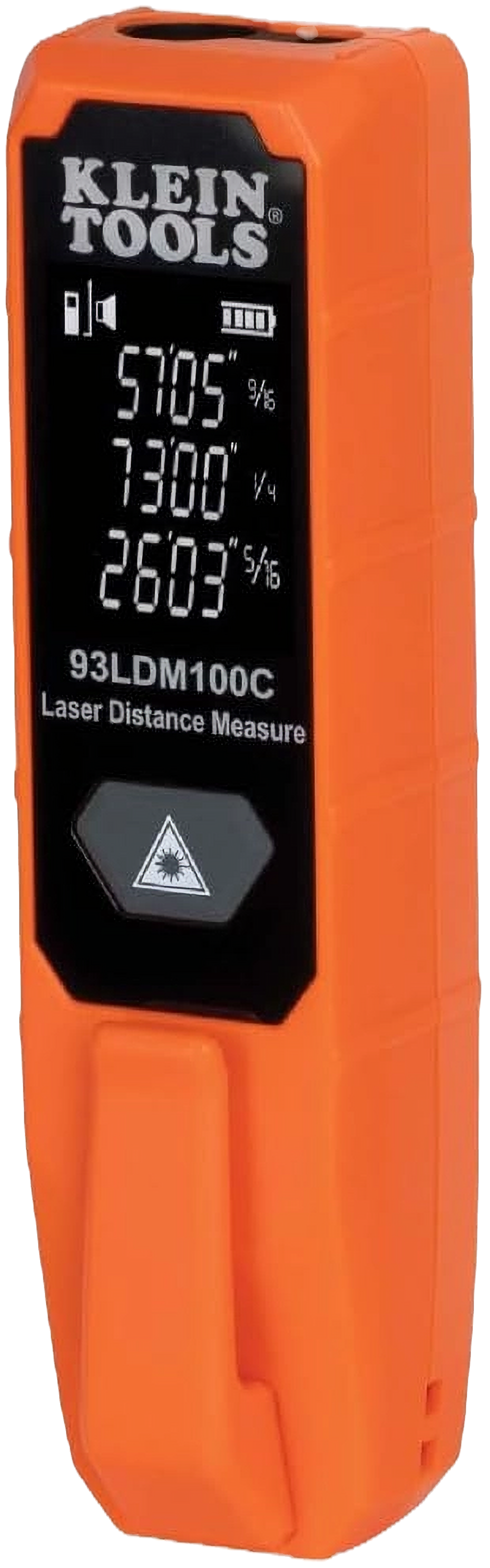
Budget: KLEIN TOOLS 93LDM100C
Pro: Bosch Blaze Outdoor 400 ft (with camera viewfinder + Bluetooth)
A laser measurer is the fastest way to capture wall height, attic span, or lid slope without dragging a ladder. The Klein Tools one gets the job done for simple rooms and close quarters. The Bosch, though, is a game-changer—it works in bright outdoor conditions, can be used from longer distances (across garages or commercial buildings), and the Bluetooth lets you sync measurements to your phone so you can drop them right into Foambid without transcribing numbers.
Why it matters in Foambid: You’re entering square footage in real time. A quick, accurate laser lets you measure a section and immediately input it into the structure buildout. That speeds up your bid and reduces math errors—especially on large, multi-zone jobs. We designed Foambid so that all entries can be captured from the ground, keeping everything quick and simple!
Moisture Meters

Budget: General MM1E
Pro: Extech MO55
Substrate conditions matter, and you won’t always “see” problems until it’s too late. The General meter is a solid, basic tool that gives you a readout on wood and drywall quickly. The Extech gives you more flexibility, especially for concrete or when you don’t want to punch holes in finished surfaces—and the Bluetooth means you can log or screenshot your findings and attach them to cu
stomer records if needed.
Why it matters in Foambid: While you’re not uploading readings yet, you are building out scope and noting potential substrate concerns. If you know the basement walls are wet or the attic deck is borderline, you can price that risk into your margin—or flag it for a delay.
Measuring Wheels
Budget: Zozen Measuring Wheel
Pro: DigiRoller Plus III
Wheels are great for long runs—perimeter, crawlspace spans, building footprints. The Zozen is sturdy and mechanical. The DigiRoller adds digital readouts, built-in calculators, and saves your last measurement on-screen so you don’t have to stop and write mid-walk.
Why it matters in Foambid: Long dimensions go straight into Foambid’s measurement input. The DigiRoller lets you keep walking while logging numbers, so you don’t break your flow or lose data accuracy between rooms.

Ladders
If you're walking attics, measuring vaulted lids, or checking sprayable rim joists, you need a safe and flexible ladder. The Louisville is solid for interior residential. The Little Giant gives you multiple configurations, extension length, and lets you hit vaulted angles or commercial lids without dragging multiple ladders. I personally have the Little Giant and it comes in handy if I ever find myself without my truck. It'll easily fit in the back of a Suburban or minivan no problem if the need arises!
Why it matters in Foambid: You’re measuring surface area that others skip. If you don’t see it, you won’t measure it. And if you don’t measure it, it’s not in the bid. Being able to safely access every sprayable surface ensures your Foambid estimate is complete—not conservative or padded.
Calipers (for Steel Framing / Ribbed Panels / Trim Thickness)
Most people don’t bring calipers to a walkthrough—but I do. On barndos, steel buildings, or any job with metal, I want to know what I’m spraying over. This tells me if I’m dealing with 26 gauge or 20 gauge, structural or trim—and that affects prep, adhesion, and sometimes even code. I've personally never "oil-canned" a sheet of metal on a building, and I'm not about to!
Why it matters in Foambid: When you’re building the estimate, substrate thickness and type may influence your yield, chemistry, or primer needs. Even if Foambid isn’t calculating gauge-specific yield today, you are. That clarity lets you price the job like you actually walked it.
Bottom Line
You don’t need all this on day one. But if you’re walking jobs without the ability to measure accurately, check moisture, or access key areas safely, you’re not estimating—you’re guessing.
And Foambid doesn’t guess. It calculates. These tools help you give it the right inputs, so you can walk faster, bid smarter, and spray jobs that were priced with precision—not hope.
Final Thoughts: This Is Where the Money’s Made
The walkthrough is where your job gets priced. It’s where the customer decides whether you know what you’re doing. It’s where you see the job before it’s your responsibility.
If you walk with purpose, ask good questions, measure carefully, document clearly, and bid while you’re there—you’ll win more jobs, with fewer surprises, and better margins.
This is the part too many guys treat like a formality. It’s not.
It’s the front end of everything.
You can read all the technical guides in the world, but if you don’t walk the job right, none of it matters. That’s why posts like Before You Pull the Trigger, Winter Foam Jobs Start with the Right Heat, and The Building Science You Can’t Afford to Skip all tie back to this moment.
If you get this part wrong, you’ll be fixing it on spray day. If you get it right, everything downstream runs smoother.
Walk smarter. Bid tighter. Own your margin.
Foambid helps you do it. This guide helps you do it better.

by Gage Jaeger, Owner and Founder of Foambid
Affiliate disclosure: As an Amazon Associate, we earn from qualifying purchases. If you buy through links on this page, we may earn a small commission at no extra cost to you.


Comments